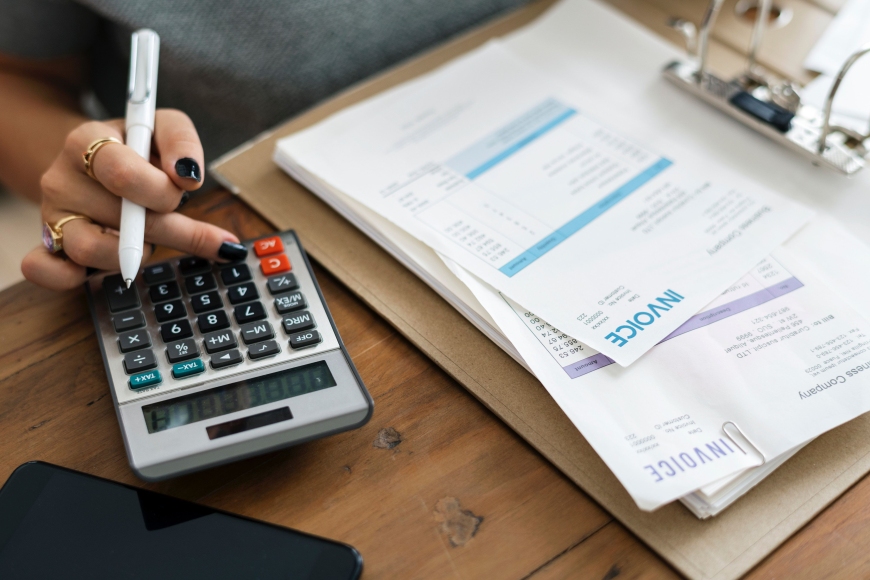


What are the Cost To Factor my Invoices?
When you submit an invoice to be factored, the typical advance is between 80% – 90% of the invoice face amount. If you have an invoice for $100 and your advance percent is set at 90%, you will be sent $90.00. We place the other 10% or $10.00 in a reserve account. The reserve money is returned back to you (less our factoring fee) after the invoice is paid.

Factoring Fee (the cost to factor)
This fee usually ranges between 2.25% – 3.25% for the first 30 days and traditionally increases an additional 1% for every ten days thereafter (Most Common Program). Alliance One LLC customizes the invoice factoring based on the industry you are in, the number of customers you give us and the total amount that you will be factoring on a monthly basis. Knowing the time frame that it takes for your customers to pay their invoices, will help you determine which tier or flat fee factoring plan works best for your company.
We are direct lenders, not brokers. Our staff is not commission based, which is why we can deliver to you, the lowest fees in the industry.
What Determines a Lower Rate?
- The dollar amount that you factor monthly
- The number of customers you give us to factor
- The creditworthiness of your customers
- Average invoice amount
- Time frame in which your customers pay
- Nature of your industry
Flat Fee Factoring
| Time frame to Receive Payment | Factoring Fee |
|---|---|
| Day 1 - 30 | 2.25% - 3.25% |
| Day 31 - 60 | Additional 2.75% - 3.50% |
| Day 61 - 90 | Additional 2.75% - 3.50% |
If your customer pays their invoice within the first 30 days from the date we purchase it from you, your fee will be anywhere from 2% – 3%, if your customer pays the invoice on the 50th day, from the date we purchased it from you, your factoring fee will be anywhere between 4% – 6% (depending on the discount rate you receive).
Tiered Fee Factoring
| Time frame to Receive Payment | Factoring Fee |
|---|---|
| 10 Day Blocks | 1.00% - 1.25% |
| 15 Day Blocks | 1.25% - 1.5% |
10 Day Block – If your customer pays their invoice within the first 10 days from the date we purchase it from you, your factoring fee will be anywhere from .75% – 1%, if your customer pays the invoice on the 11th day, from the date we purchased it from you, your factoring fee will be anywhere between 1.5% – 2% (depending on the discount rate you receive).
15 Day Block – If your customer pays their invoice within the first 15 days from the date we purchase it from you, your factoring fee will be anywhere from 1.25% – 1.5%, if your customer pays the invoice on the 16th day, from the date we purchased it from you, your factoring fee will be anywhere between 2.5% – 3% (depending on the discount rate you receive).
Factoring Example (Flat Fee)
Invoice Amount $100.00- Your cash advance at 90% = $90.00
- Your reserve account positive $10.00
- Invoice paid on Day 25
- Reserve money returned back to you $8.00
- Factoring Fee 2% or $2.00
In this Example – If you sell a $100.00 Invoice and if your customer pays within 30 days, you collect in total $98.00 and we collect $2.00
You can select a flat rate for the first 30 days and switch over to a tier level for the next 30 days. If you know your customer will pay you within 15 days, you are better off with a 15-day tier fee structure. If your customers are paying you in 30 days, it’s more cost-effective to select the flat fee structure.
If you come across a website that is offering you discount fees that sound too good to be true; it probably is. Do not fall for any teaser rates and make sure you read the fine print. Factoring companies that offer unrealistic rates, will usually charge high monthly fees, or any miscellaneous fees that far exceed what you expected to pay.