Invoice Factoring for New York Businesses
A delivered order is not the same as cash in the bank. For a New York wholesaler supplying another business, the next inventory purchase may be due before the customer pays the last invoice. Invoice factoring is one way to address that gap using eligible receivables rather than waiting out the full payment term.

Over 30,000 Satisfied Clients!
Alliance One LLC is a direct invoice factoring company based in New York. This guide focuses on the practical questions a supplier should ask about delivered goods, customer acceptance and receivable quality—not on an assumed local office network or a promise of automatic approval.
Distribution is a useful starting point—not the whole New York economy
Empire State Development identifies distribution as a New York industry and describes the state's access to East Coast markets through its highways, railways and ports. That is the verified geographic context for this guide. It does not establish that every distributor has a cash shortage or that an individual company's invoices qualify for factoring.
Consider the working-capital sequence for a business-to-business supplier: acquire goods, arrange delivery, issue an accurate invoice, obtain customer acceptance and wait for payment. Each step can require money before the receivable becomes cash. The timing depends on the particular contract and customer, not simply the supplier's New York address.
Look at the delivery-to-approval interval before the due date
An invoice described as payable in 30 days may still encounter an administrative delay if the buyer is waiting for a receiving report or the invoice refers to the wrong purchase order. Reconcile quantities shipped, quantities accepted and the amount billed before treating the invoice as a financing opportunity.
For partial shipments, separate the goods already accepted from the balance still on order. An open purchase order and an unfulfilled order are not interchangeable with a completed sale. Factoring should be evaluated against the actual receivable; it does not resolve a dispute about whether goods arrived.
- Match the invoice number and customer legal name to the order and receiving records.
- Keep delivery confirmation and any written acceptance available.
- Record returns, credits and deductions instead of presenting the gross invoice as undisputed.
- Identify when the customer's payment term actually starts.
How a receivable becomes a factoring discussion
Invoice factoring involves selling eligible unpaid invoices to a factoring company under an agreement. The factor evaluates the business, the customer and the invoices. If approved, the funding and settlement arrangements follow that agreement; an invoice's face amount is not a promise that the same amount will be available immediately.
Ask how customer verification, payment instructions, fees and the remaining balance work before choosing a facility. Compare the total cost with the business purpose of accessing cash earlier. A supplier trying to replenish a proven repeat order has a different decision from a business trying to finance goods it has not yet sold.
Alliance One's wholesale and manufacturing pages provide relevant service information. Their existence does not mean every type of product, buyer or invoice is accepted. Discuss the actual transaction rather than assuming eligibility from an industry label.
A wholesale delivery with another order behind it
Hypothetical example: a New York distributor delivers a $24,000 order to a business buyer on an agreed 45-day payment term. A repeat order arrives the following week, but the supplier's next inventory payment is due before the first invoice matures.
The useful first step is to confirm that the original delivery was accepted and that there are no unresolved credits. The distributor can then discuss whether that completed-sale receivable is suitable for factoring and compare the agreement's cost with its inventory plan. The example assumes no advance percentage or funding amount; it is not an Alliance One client story.
This scenario is illustrative only. It is not a real client, and figures are not a quote or promise of terms.
Review the customer mix as well as the inventory cycle
A small group of large buyers can create uneven receipts even when sales are healthy. List the invoices by customer and due date, then compare that schedule with inventory, delivery and payroll obligations. This shows whether a single slow account or a recurring timing mismatch is driving the request.
Avoid treating invoice factoring as a substitute for resolving defective goods, returns or pricing disputes. If a buyer is entitled to deduct an amount, disclose it. Accurate supporting records make the financing conversation more useful and protect the integrity of the receivable.
Work directly with a New York-based factoring company
Alliance One is a direct factor, not an independent broker matching an application with unrelated lenders. Use the existing application to describe the business location and customer receivables. There is no separate New York application and no need to select a different state because a customer is located elsewhere.
Before proceeding, ask which invoices can be considered, what documentation is needed and how the proposed agreement would handle credits or late payments. This guide does not quote rates, guarantee approval or promise a funding date.
Relevant services for New York businesses
Factoring for New York businesses
Share a few details about your company and invoices. We will confirm eligibility and walk you through next steps.
Frequently asked questions
Can a New York wholesaler consider invoices owed by an out-of-state buyer?
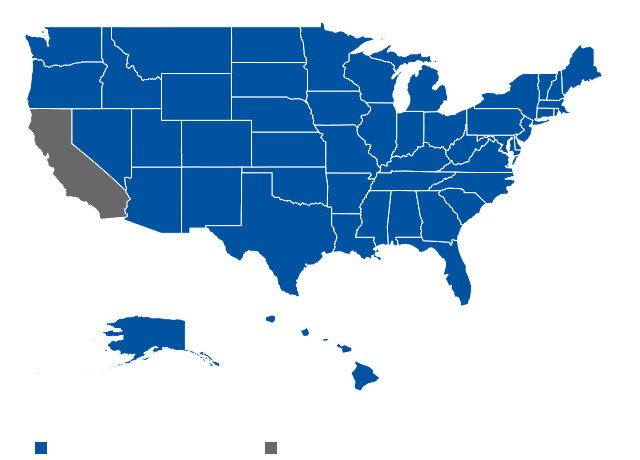
The business-location rule concerns where the applicant's business is located, not merely where its customers are located. A customer in another state, including California, is not by itself a reason to reject a New York applicant. The actual customer and invoice still require review.
Is a purchase order enough if the goods have not shipped?
Do not treat an unfulfilled purchase order as an accepted invoice for completed goods. Explain what has been delivered and accepted, and ask Alliance One which receivables it can consider. This page does not advertise purchase-order financing.
What if a buyer has accepted only part of the shipment?
Identify the accepted quantity, the invoiced amount and any disputed balance separately. Retain the receiving record and disclose credits. Do not assume the entire original order can be financed.
What if a delivered wholesale order is later returned?
Record the return and any credit against the invoice rather than continuing to present the original amount as undisputed. Ask how the proposed factoring agreement handles returns, credits and adjustments before relying on an expected settlement.
Sources
State economic context above is drawn from the official sources below. Examples labeled hypothetical are not source-backed.
- Empire State Development — Distribution (opens in a new tab)
Supports the description of New York distribution and access to East Coast markets through transportation networks. Reviewed October 15, 2026. Invoice-documentation examples are general educational analysis, not findings about all New York businesses.